Recreating the Inferno: Behind the Scenes of 'Notre-Dame brûle' on TF1
The film 'Notre-Dame brûle' on TF1 recreates the dramatic fire of the cathedral. Discover how director Jean-Jacques Annaud achieved this realistic portrayal.
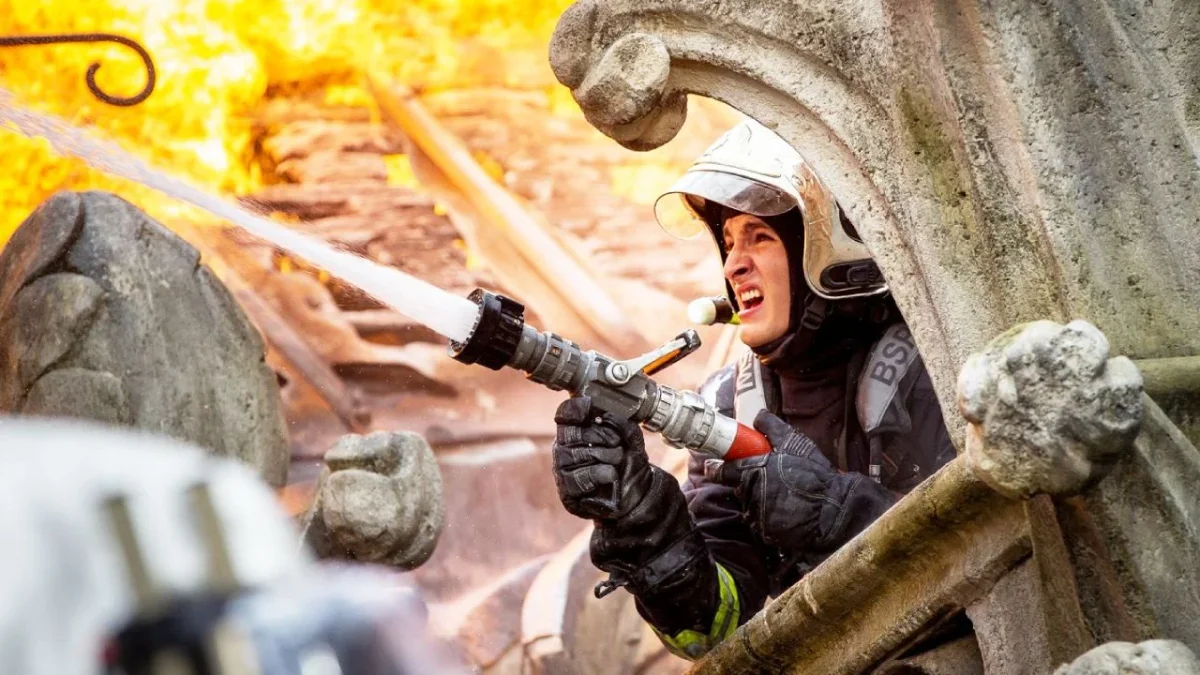
The film Notre-Dame brûle, airing tonight on TF1, vividly depicts the dramatic fire that engulfed the iconic cathedral on April 15, 2019. Directed by Jean-Jacques Annaud, the film meticulously reconstructs the harrowing events of that fateful day.
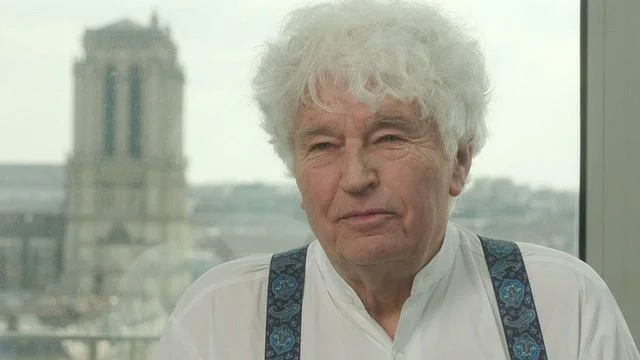
Annaud’s cinematic endeavor unfolds hour by hour, showcasing the most significant disaster in the cathedral’s history. On that day, brave individuals risked their lives in a heroic attempt to save the monument from destruction.
A Detailed Reconstruction
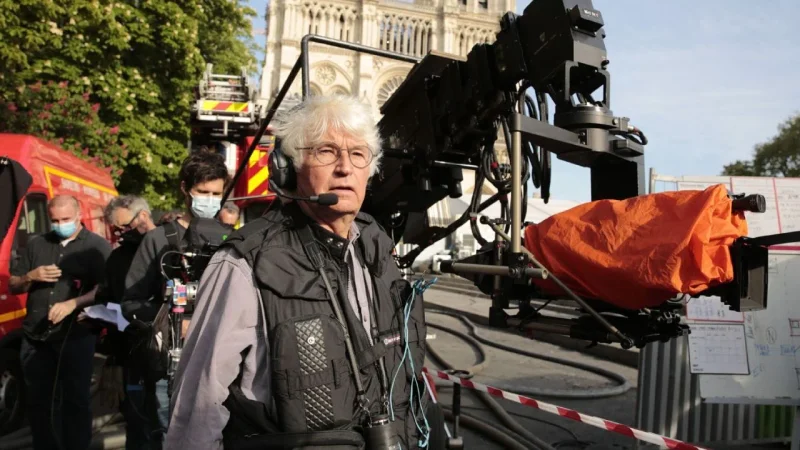
To achieve a realistic portrayal of this tragic event, Annaud and his team undertook an enormous task. Aiming for a spectacular visual experience, Notre-Dame brûle places the cathedral at the forefront of its narrative. While some scenes were filmed inside the actual structure, much of the film required the reconstruction of the cathedral in a studio setting.
According to Annaud, the cathedral was largely inaccessible due to the pervasive presence of lead and the risk of collapse. He noted, "But in any case, we had to drown the edifice in smoke, cover the ground with ashes and dust, drop tons of burning beams, and flood the flooring."
The team meticulously recreated significant parts of the cathedral, including the nave, spiral staircases, exterior walkways, and the massive bell tower featured in the final scene. Annaud emphasized, "We had to show all these iconic places of Notre-Dame that were at the heart of the catastrophe, both before and during the fire."
 Pathé
Pathé
The Most Challenging Scene to Shoot
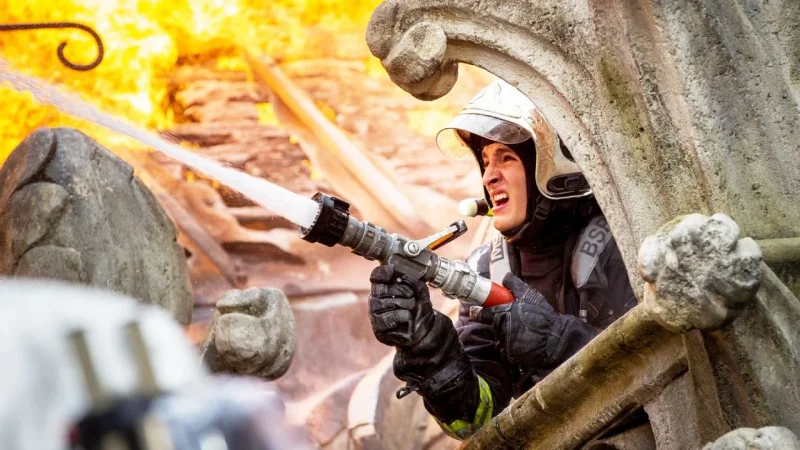
One of the most complex scenes to film was the collapse of the vault under the weight of the falling spire. Annaud described it as a particularly dangerous moment, stating, "It's really a moment that is quite dangerous because we have a surface of I don't know how many hundreds of square meters falling in flames. And it consumes all the oxygen on set."
An insight into this sequence can be found in a video where Annaud discusses the inherent challenges of shooting such perilous and expensive scenes. He remarked, "Those who remain on set are required to wear almost a space suit. These scenes were rehearsed extensively, and it went very well. We obviously had to do it in one take. If I had to do it again, I would have taken a week off my schedule."
For Annaud, capturing this type of shot is nothing short of magical. He explained, "At the moment of saying action, when we trigger all the special effects, this set, which seemed so simple under a calm sky, transforms into a blaze with gigantic flames. Suddenly, there is a magic and a power on set."
The director pointed out that this was a complete reconstruction, as no surveillance cameras were present at Notre-Dame to capture that moment. He noted, "The firefighters themselves, understaffed in their audiovisual service that day, have no images of this crucial scene."
In reality, the vault fell from a height of 40 meters, unleashing 500 tons of burning beams, mortar, and stones onto the cathedral floor. "This sequence lasts about 1 minute and 30 seconds on screen, but it required us weeks of preparation!"
To ensure they didn’t have to repeat this critical shot, Annaud filmed with a dozen cameras simultaneously from various angles, some positioned amidst the flames and protected by what are known as crash boxes—metal boxes designed to withstand shock and heat.
He shared, "Not a single one of these cameras failed us! However, the intensity of the fire partially scorched the studio ceiling; fortunately, we were well insured."
 Pathé
Pathé
Gigantic Sets
For the construction of the sets and filming locations in the studio, Annaud and his team needed suitable spaces that could accommodate structures 25 to 30 meters high, many of which would ultimately be set ablaze.
He recounted, "We absolutely wanted to shoot in France, but the fact is that not a single studio had the necessary infrastructure for this project. We had two options: the Cité du Cinéma in Saint-Denis and Bry-sur-Marne. In Saint-Denis, we filmed indoors, and in Bry, we used the 'back lot,' a vast outdoor space."
The film crew also required workshops for carpentry, metalworking, sculpture, and plaster molding. Annaud managed to secure the essential space needed for his film’s infrastructure at Cité du Cinéma, where he benefited from the expertise of the technical teams accustomed to such productions.
He praised the exceptional craftsmanship of Jean Rabasse, the chief decorator, who had previously collaborated on films with renowned directors such as Jean-Pierre Jeunet, Bernardo Bertolucci, and Roman Polanski. Annaud reflected, "Our initial discussions were exciting and productive. Beyond all these challenges, I kept the spirit of this project in mind: it had to be filmed in the right place, where Notre-Dame was conceived, sculpted, and built. So in France."
To supervise the construction of the sets, Annaud’s team set up production offices at Cité du Cinéma, occupying an entire floor. They created drawings, models, and 3D renderings, with the director requesting miniature versions of Notre-Dame or its bell tower, akin to construction toys made of cardboard or wood.