The Evolving Role of Directors in Modern Film Production: A Look Ahead to 2026
As we approach 2026, the role of directors in film production is evolving significantly. This article explores their changing responsibilities, the impact of streaming and AI, and the significance of Berlinale 2026.
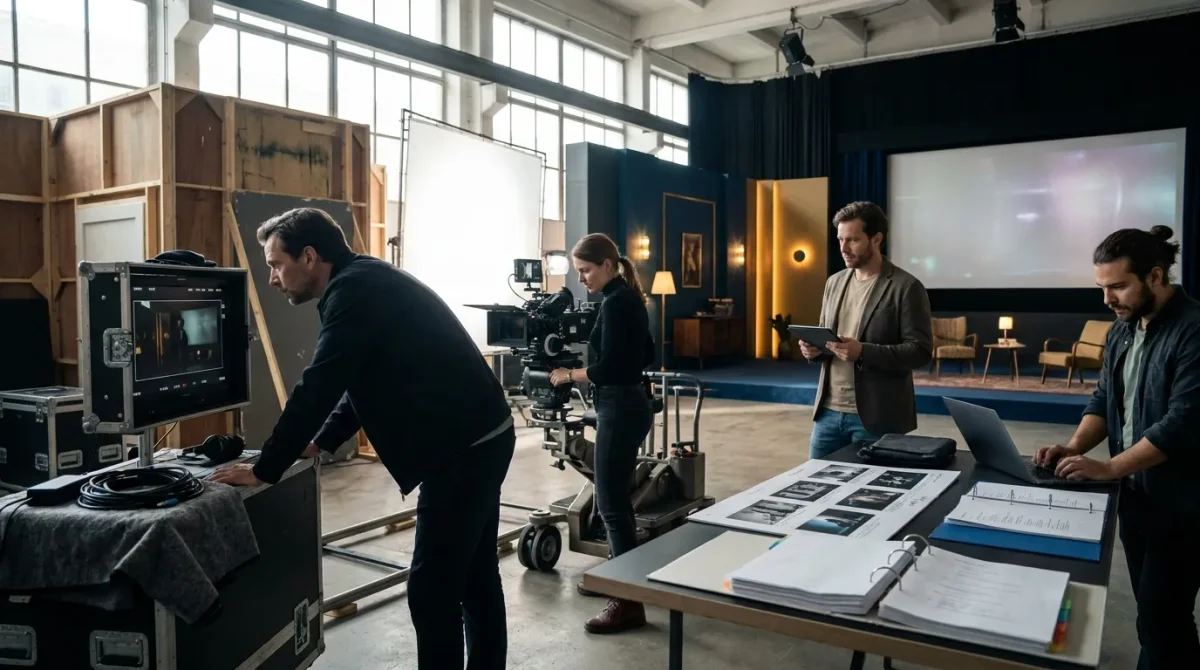
In the realm of cinema and television, the role of directors is undergoing a significant transformation as we approach 2026. No longer confined to being the sole creative voice on set, directors are now required to engage with producers, understand budgets, navigate streaming platforms, and integrate new technologies into their projects from the very beginning. This evolution adds layers of complexity to modern film production while simultaneously making it more exciting.
For film enthusiasts in Germany, this shift is particularly noteworthy. The film industry is visibly changing, and the Berlinale 2026 is set to be more than just a festival; it will serve as a showcase for new artistic voices, discussions about artificial intelligence, independent films, and the ongoing debate about the extent of artistic freedom in a production landscape dominated by numbers, platform logic, and funding constraints. Understanding the role of directors can enhance one’s appreciation of new film releases, streaming highlights, and strong critiques.
This article delves into how the responsibilities of directors are evolving, the economic pressures they face, the influence of AI and streaming, and why Berlinale 2026 will be a pivotal moment for the industry. It will also feature relevant data, insights from industry professionals, a FAQ section, and practical tips for those who wish to gain a deeper understanding of the filmmaking process.
Directing in 2026: More Than Just Creative Leadership
Traditionally, the role of the director has been clear-cut: they dictate the visual language, performance, pacing, and tone of a film. While this remains true in 2026, modern film production demands much more. Directors are increasingly acting as intermediaries between art and organization. They are involved in project development from early stages, liaising with broadcasters and streaming services about target audiences, and articulating their vision in a way that remains financially viable.
This is particularly crucial in Germany, where the financial landscape is strained. According to the Federal Association of Directors, 71% of directors struggled to make a living solely from directing in 2025, with 69% describing their job prospects as poor or uncertain, and 37% having no upcoming projects in sight.
Working Conditions for Directors in Germany
| Metric | Value | Significance for Directors in 2026 | |--------|-------|-------------------------------------| | Livelihood from directing not possible or limited | 71% | High financial pressure | | Job prospects poor or uncertain | 69% | Less planning security | | No upcoming projects | 37% | Fragile career paths | | Income below €30,000 gross from directing | 58% | Precarious work despite high responsibility |
These statistics reveal that while directing carries a prestigious creative label, it often comes with economic uncertainty. This reality impacts decision-making on set. With less time, smaller teams, and tighter budgets, directors must prioritize more effectively. Some become very precise in their approach, while others find their creative freedom constrained. This creates a tension within film production in 2026: significant responsibility coupled with limited resources.
"The industry is facing a persistent structural crisis, with existential consequences for the German film sector."
For audiences, this is not merely a matter of industry politics; it directly influences the types of films that get made, their boldness, and which directors remain visible. Film fans keen on tracking recent releases can find valuable insights in the 2026 cinema calendar, which lists all major film debuts and series finales.
The Impact of Streaming on Directors' Work
Streaming has not only expanded the film production landscape but also made it more quantifiable. Directors used to focus primarily on cinema, television broadcasts, or festival circuits. Today, they must also consider watchtime, series engagement, international marketability, and platform profiles. This requires a new understanding of how content functions across various distribution channels.
This shift does not necessarily lead to uniformity in filmmaking. However, it does change the rules of engagement. A theatrical thriller may be allowed to be edgier, while a streaming series often needs a different pacing structure. Family films must now work across multiple devices, and sound design is increasingly considered, as many viewers watch from home using soundbars, headphones, or TV speakers.
For directors, this means a step-by-step adaptation: first, they must clearly position their narratives; second, they need to tailor their visual and storytelling styles to the format and audience; and third, they must collaborate closely with editing, post-production, and platform strategies. This new closeness between creativity and commercialization is one of the most significant trends in contemporary film production.
The market's economic scale remains impressive. According to PwC, the German entertainment and media industry is projected to grow by an average of 3.4% per year from 2021 to 2026, with total revenues expected to reach €75.0 billion in 2026. This indicates that while money exists in the market, it does not automatically translate to fair distribution among creative roles such as directing.
For insights into platform dynamics, the 2026 streaming platform comparison provides clarity on how content is increasingly tailored to user habits. This logic is already affecting directors during the development phase of their projects. The article on Streaming Platforms 2026: Best Films and Series in Comparison further illustrates how different providers align their content and target audiences.
AI in Film Production: Assistance, Risks, and New Power Dynamics
Few topics are reshaping the conversation around directors as profoundly as artificial intelligence (AI). By 2026, AI is no longer a futuristic concept but a key component of many workflows. It aids in creating storyboards, pre-visualization, subtitling, VFX preparation, audio processing, and even initial editing ideas. For smaller productions, this can be a significant advantage, allowing for faster preparation of tasks that were previously costly or time-consuming.
However, this raises critical questions. Who owns a style? To what extent can technology influence creative decisions? And what happens if platforms or producers prefer to rely on safe, algorithmically validated content over bold artistic visions? These concerns are not merely theoretical; they are already visible at festivals. For instance, a film composed entirely of AI-generated images was screened at Berlinale, following the 2024 presentation of a completely AI-generated film, ‘What’s Next?’ Meanwhile, reports indicate that Oscar rules may allow for AI involvement (tagesschau.de).
"The future of film lies in the skillful use of AI as a tool for artistic innovation."
This is a crucial point: AI does not automatically replace directors. Instead, it shifts their responsibilities. Directors are becoming more like curators of possibilities, needing to choose, discard, and express a human perspective. This is where their value lies.
A simple before-and-after comparison illustrates this shift. In the past, a team would hand-draw storyboards and plan effects through multiple iterations. Today, a director can test visual ideas and simulate variations within hours. While this saves time, it also creates the temptation to rely too heavily on quick solutions. Effective directing thus involves recognizing when technology aids creativity and when it obscures originality.
The Threat of Economic Pressure on Creative Expression
While film fans often discuss visions and artistic intent, the reality of film production is frequently dominated by budgets, funding applications, and schedules. This economic perspective is crucial. In Germany, the total number of productions reportedly fell from 1,374 in 2022 to 988 in 2025, marking a decline of approximately 28% (Bundesverband Regie).
At the same time, the SPIO indicates that the number of German feature film premieres in cinemas increased by 13% in 2025 compared to 2024. While this may seem positive at first glance, the situation remains complex, as documentary films dropped from 86 to 81 during the same period, and the overall volume remains below pre-pandemic levels (SPIO).
For directors, this translates to increased competition for fewer reliable opportunities. In practice, this often results in three key effects: first, projects are developed more cautiously; second, familiar stories, adaptations, and franchises gain importance; and third, there is heightened pressure to present films as ‘marketable’ early on.
This pressure is particularly evident among industry service providers. According to VTFF, 91.4% of surveyed companies report high cost pressure, 81% indicate declining order volumes, and 58.6% see a shift of productions abroad (VTFF). When technical firms, post houses, and production partners face pressure, directors feel the impact immediately: fewer shooting days, tighter post-production schedules, and reduced risk budgets.
For those interested in emerging voices, the Independent Films 2026: New Voices and Trends in Focus article offers numerous examples of how young directors are gaining visibility despite limited resources. The independent sector particularly highlights the close connection between creativity and production realities today. Additionally, the director's conversation with Lena Vogt, titled “My Film is a Rebellion Against Conventions,” provides concrete insights into how young directors navigate production pressures.
Berlinale 2026 as a Barometer for New Directing Trends
The Berlinale 2026 represents more than just glamour for directors; it serves as a testing ground. The festival will showcase which themes are currently resonating, which aesthetics are capturing attention, and which debates are shaping international film production. For Germany, this festival is especially significant as it brings together auteur cinema, political narratives, debuts, and international co-productions.
The attendance figures from Berlinale 2025 illustrate the event's prominence: 336,000 tickets, 2,429 media representatives from 78 countries, and 17,135 industry professionals were recorded (Berlinale). Having a film featured here provides visibility far beyond Germany’s borders.
Moreover, the symbolic significance of directing is underscored by the presence of Wim Wenders as jury president in 2026, a figure synonymous with auteur cinema, international relevance, and cinematic integrity. Reports suggest that Berlinale is increasingly focusing on intriguing directorial voices and debuts rather than solely on established names (rbb24).
For film fans, this perspective is beneficial on two fronts. First, festivals often unveil tomorrow’s trends earlier than mainstream cinema. Second, it enhances understanding of why certain films gain traction and how they reflect the current landscape of filmmaking.
Conclusion
As we look towards 2026, the role of directors in film production is undeniably complex and multifaceted. With the pressures of economic realities, the rise of streaming, and the integration of AI, directors must adapt to a rapidly changing landscape while maintaining their artistic vision. The Berlinale 2026 will serve as a critical platform for showcasing this evolution, providing insights into the future of cinema and the voices that will shape it.