
Understanding CGI in Film: What Makes Good Effects Stand Out
Explore the intricacies of CGI in film, from the nuances of visual effects to the pressures faced by the industry. Understand what makes good CGI stand out and how it integrates with storytelling.
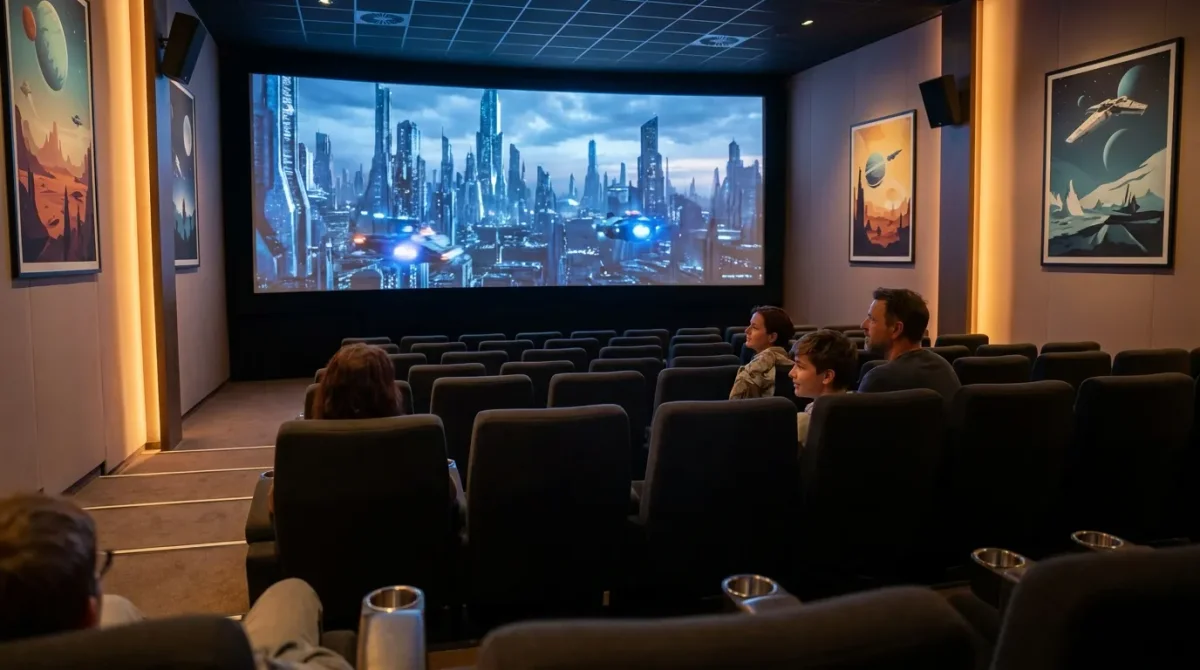
When discussing blockbuster films, fantastical worlds, or spectacular series, the term CGI inevitably comes up. Many praise modern CGI films for their impressive visuals, while others quickly claim that everything appears artificial. The reality, as is often the case, lies somewhere in between. Not every digital effect is inherently good, and not every eye-catching scene exemplifies strong visual effects.
For film enthusiasts in Germany, the topic is particularly intriguing. Digital tools play a significant role in cinemas, streaming releases, and even smaller productions today. Monsters, outer space, destroyed cities, or invisible corrections in the background—much of what you see on screen is created in post-production, often without the audience even realizing it. This subtlety is frequently a hallmark of quality work.
This article aims to clarify step by step what distinguishes CGI films from traditional animation techniques, why visual effects encompass more than just explosions, and how to truly recognize quality. We will explore motion, light, timing, storytelling, and the distinction between loud spectacle and believable visual worlds. Additionally, we will examine current industry data from Germany, new trends like virtual production and AI, and why the economic situation behind the scenes is often more challenging than viewers might think.
CGI Films, VFX, and Special Effects: Defining the Terms
Many people use CGI and visual effects interchangeably, but this isn't entirely accurate. CGI stands for computer-generated imagery, referring to elements created entirely digitally, such as a dragon, a spaceship, a digital background, or even a small object in a shot. Visual effects, often abbreviated as VFX, encompass a broader category that includes the combination of live-action footage and digital enhancements, such as smoke, set extensions, removed cables, or digital crowds. Useful explanations can be found from sources like Filmproduktion Bern and Adobe.
Another important term is practical effects, which are real effects created on set. This includes masks, miniatures, animatronics, fake blood, pyrotechnics, or actual sets. In quality productions, all three levels often work together. For example, a monster might start as a real head model on set, be digitally enhanced, and receive final touches in compositing.
Thus, the ongoing debate between practical effects and CGI is often too simplistic. The strongest films utilize the appropriate tools for each scene. Good visual effects should not only impress; they should fit the shot, feel right, and support the film rather than overshadow it.
Why Good Effects in CGI Films Are Often Invisible
When people think of CGI films, they often envision massive battles, alien worlds, or superheroes soaring through the sky. However, many of the best visual effects go unnoticed, which is precisely what makes them effective. Invisible effects can correct the weather, extend buildings, remove safety wires, add crowds, or alter the sky. The audience shouldn't think, 'Great effect.' Instead, they should think, 'I believe this world.'
According to Slashcam, hidden visual effects are becoming increasingly common in films and series, especially because they don't look like effects but rather make the shot believable. Quality is not solely defined by size or detail but by integration.
A good image emerges from multiple layers. It begins with the idea: what should the scene convey? Then come the camera, acting, lighting, set design, and later the digital enhancement. When all parts work together, the result appears natural. However, if just one element is out of sync, the illusion quickly collapses. A background may look flat, a character might seem weightless, or an object may not appear genuinely present in the space.
This is why some older films with less computing power still hold up remarkably well, while some new productions, despite hefty budgets, can feel artificial. Good visual effects do not seek attention; they support the scene, respect space, light, and rhythm, and immerse you in the story rather than remind you of the computer calculations involved.
How to Recognize Strong CGI Films
The key question is not: Is it realistic? The better question is: Is it believable? A film can be stylized, exaggerated, colorful, or completely absurd, but it must remain consistent within its own world. Good CGI films adhere to this principle.
A central aspect is movement. Director Gore Verbinski articulates this clearly:
"You can create a very realistic helicopter. But as soon as it flies incorrectly, your brain knows it’s not real. The helicopter must earn every curve. It must move correctly. Animation is also crucial; sometimes it’s not the lighting or the shot, sometimes it’s the movement."
This is where weaker effects often falter. Surfaces may look impressive, but weight, inertia, and timing may be off. A creature might jump too lightly, a vehicle may brake without a sense of mass, dust may react incorrectly, or a digital character might look slightly off from its counterpart. Our brains pick up on these discrepancies quickly.
Additionally, light and contact are vital. Does the digital object cast shadows consistent with the set? Does it reflect its surroundings? Does it credibly touch the ground? Does it elicit reactions? A good rule of thumb is: the more a digital character interacts with the real world, the more challenging the scene becomes.
Another point is visual language. Good effects align with the cinematography. If a film employs natural light and calm focal lengths but suddenly inserts a slick digital sequence, it feels out of place. Thus, the best visual effects feel like a part of the direction rather than an afterthought.
Numbers from Germany: Progress on Screen, Pressure Behind the Scenes
Fans of CGI films often only see the finished product. However, behind it lies an industry that is growing yet under significant pressure in Germany. Current figures from Baden-Württemberg, a stronghold for animation and visual effects, reveal that the revenue of the animation and VFX sector is projected to reach 170 million euros in 2024. This represents an 800 percent growth since 2010, according to Goldmedia and MFG Baden-Württemberg. Additionally, there are 85 companies in this sector, with 48 percent of orders coming from audiovisual media such as films, series, streaming, and TV.
Current Figures for the German Animation and VFX Industry in Baden-Württemberg
| Metric | Value | Context | |----------------------------------|---------------------|--------------------------------------------| | Revenue 2024 | 170 million euros | Animation and VFX sector in Baden-Württemberg | | Growth since 2010 | +800 % | Industry development in Baden-Württemberg | | Companies | 85 | VFX and animation companies | | Orders from audiovisual media | 48 % | Film, series, streaming, and TV |
These figures illustrate that the field is both creative and economically significant. However, the situation is far from relaxed. A survey by the VTFF found that 72.8 percent of German VFX studios rated the first half of 2024 as somewhat to significantly worse. 36.4 percent described their current profit margin as needing improvement or precarious, with 27.3 percent expecting a decline of at least 10 percent in profit margins.
This discrepancy is crucial for understanding quality. Good visual effects require time, experienced teams, and planning. When budgets shrink or productions face time pressure, the impact is often visible later in theaters or on streaming platforms. Thus, quality is not solely about software; it is also about production conditions.
When Movement, Light, and Editing Work Together in CGI Films
Many discussions about CGI films focus too heavily on surfaces. The real magic often lies in the interplay. An effect succeeds when animation, camera movement, editing, sound, and light all speak the same language.
Consider two scenes. In Scene A, a digital creature jumps over a car. The model is detailed, the skin has texture, and even small muscles are visible. Yet, the scene feels cheap. Why? Because the landing lacks weight, the shadow is slightly too soft, and the camera reacts too smoothly to the movement. In Scene B, the model may be simpler, but the creature visibly dents the car, dust flies up appropriately, the camera reacts with slight delay, and the edit allows enough time for the mass to be felt. Scene B is almost always more convincing.
Gore Verbinski also touches on modern tools:
"I think the simplest answer is that the Unreal Engine has become part of the VFX landscape. In the past, there was a separation: the Unreal Engine was great for video games, but then people began to believe that it could also be used for finished visual effects in films. Thus, a kind of video game aesthetic has become part of the world of cinema."
This is not a blanket criticism of real-time tools; rather, it serves as a warning: quick images are not automatically good images. If a scene looks too much like game graphics, it often stems not only from the software but also from material feel, timing, camera work, and direction. Therefore, good visual effects always require cinematic thinking.
Practical Effects and CGI Are Not Opponents
Online, one often reads: everything was real in the past; today, everything is CGI. While this sounds catchy, it is only half true. Even older films employed optical tricks, matte paintings, miniatures, and later digital post-production. Modern productions still rely heavily on practical effects. The best results often emerge where both worlds intersect.
A good example is a creature scene. When actors have a real reference object on set, they tend to perform more convincingly. A physical head, a piece of a suit, or a model aids in line of sight, lighting, and interaction. This blend of practical and digital enhances the overall believability of the final product.