
How AI Will Transform Cinema by 2026
The film industry is rapidly evolving with advancements in technology, especially AI. By 2026, AI's integration will transform production processes, budgets, and viewer experiences, raising essential questions about creativity and ethics in cinema.
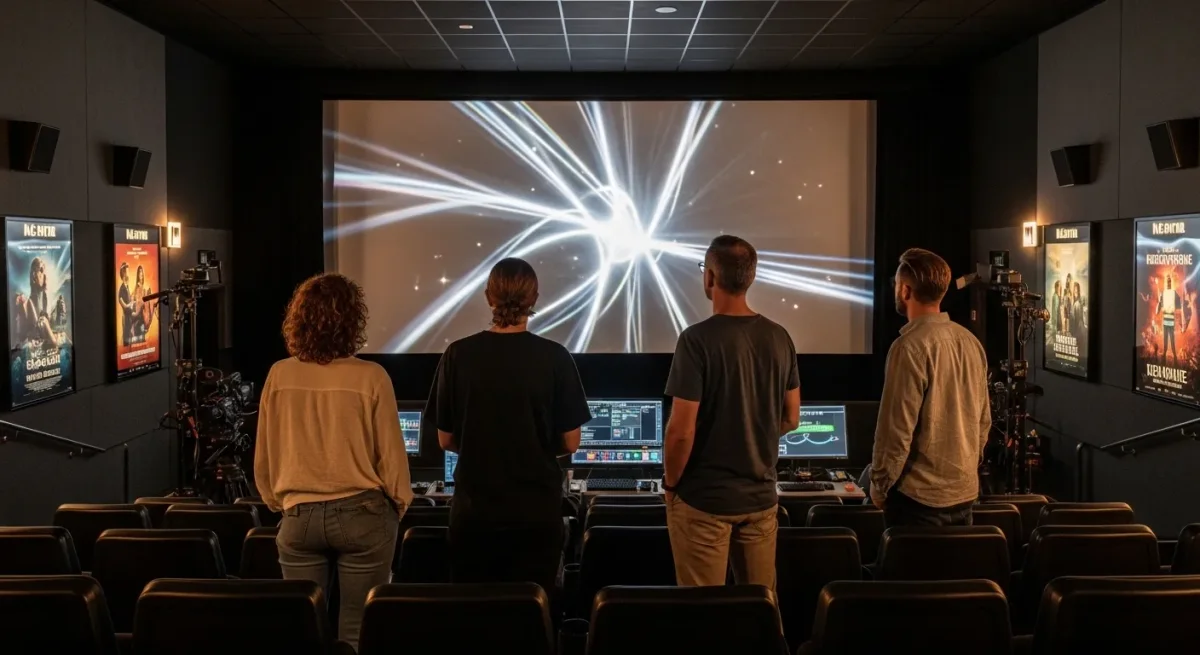
For film enthusiasts, the evolution of cinema is becoming increasingly apparent. The industry is undergoing rapid changes, driven by advancements in technology such as new cameras, virtual studios, and streaming services. By 2026, another transformative element will emerge: AI. This shift is no longer a niche topic; it encompasses film releases, series, home cinema, film reviews, and the very essence of film creation, revealing the most exciting filmmaking trends.
The optimistic outlook is that AI does not signify the end of creativity. Instead, it can streamline processes, reduce costs, and assist smaller productions. However, there are legitimate concerns regarding job security, ownership of digital voices, and whether audiences will notice when scenes, faces, or dialogues are generated by AI. This debate is particularly significant in Germany, where the market is caught between traditional cinema, streaming, and home entertainment.
As we approach 2026, it becomes a pivotal year. While traditional cinema attendance is declining, the media market continues to grow. Concurrently, AI is transitioning from experimental use to a standard tool. This article explores the implications for audiences, filmmakers, and the industry in Germany. It will highlight where AI is already integrated into productions, the increasing importance of rules and ethics, the opportunities for indie films and family movies, and what film fans should pay attention to in the future. Expect data, examples, practical insights, and a look at how a good cinema magazine can make these developments comprehensible.
Why 2026 is a Turning Point for Cinema
The statistics clearly illustrate why 2026 is so intriguing. According to PwC, the German entertainment and media sector is projected to generate €111.6 billion in 2024, with an anticipated increase to €126.1 billion by 2029. Meanwhile, the SPIO reports a predicted 5.8% decline in cinema attendance and a 6.5% drop in box office revenue for 2024. In contrast, home video revenue is expected to rise by 8%, reaching €3.667 billion.
Key Market Data for Cinema, Streaming, and Media in Germany
| Metric | Value | Context | |------------------------------------------|---------------------|-----------------------------------| | Entertainment and media revenue Germany 2024 | €111.6 billion | Overall market growth | | Forecast 2029 | €126.1 billion | Further growth expected | | Cinema attendance Germany 2024 | -5.8% | Traditional cinema under pressure | | Box office Germany 2024 | -6.5% | Revenue in cinemas declining | | Home video revenue 2024 | €3.667 billion (+8%)| Streaming and home usage rising |
These figures are more than just numbers; they explain why AI is becoming increasingly prevalent in the film industry. As cinema competes for attention and home entertainment rises, studios and platforms face mounting pressure to produce content more quickly, localize it better, and market it more effectively. This is where AI steps in.
For viewers, this means that by 2026, they will likely see more films that have been planned, edited, or translated with the help of AI, even if they don’t notice it at first glance. For a cinema magazine, it becomes crucial not only to list premieres but also to explain production methods and contextualize new filmmaking trends.
Where AI is Already Working in Film Production
Many people associate AI with entirely artificial films. However, the reality is different. In 2026, AI will rarely replace entire productions; instead, it will appear in numerous small ways. This incremental integration makes it powerful. AI can assist in the ideation process by organizing initial concepts, sketching character profiles, or testing various tones. In the preparatory stages, it aids in planning, casting lists, location descriptions, and storyboards.
AI's strongest impact is felt in post-production, where it can sort footage, generate subtitles, transcribe dialogues, adjust voices, and prepare various language versions more swiftly. According to the Media Barometer 2025, 56% of companies in Germany have already integrated AI into their workflows. Furthermore, a survey by Macromedia indicates that 90% of small and medium-sized enterprises in the film industry see potential in marketing, localization, or post-production.
Imagine the production process as a chain where each stage previously required significant manual labor. Now, many points can be pre-processed: raw materials are automatically tagged, trailer versions are tested on target audiences, and platform texts are generated faster. This is a massive advantage for streaming services that need to catalog, describe, and adapt large quantities of titles for various countries.
For cinema fans, this is particularly noticeable when a film is released almost simultaneously in multiple language versions or when smaller productions suddenly appear more polished. This makes it worthwhile to explore technical aspects of home cinema as well. If sound and presentation are of interest, articles like Dolby Atmos in Cinema: When the Premium Price is Worth It provide valuable insights, as new productions are increasingly designed for specific experiences. Additionally, Dolby Atmos at Home Explained: When Cinema Sound is Truly Worth It highlights how these developments will also resonate in living rooms.
How AI is Changing Budgets
Perhaps the most significant disruption is not visual but financial. AI is lowering barriers. According to UnivDatos, the global market for generative AI in film was valued at $366.9 million in 2023, with an expected annual growth rate of approximately 26.5% from 2024 to 2032. This indicates substantial investments from studios, service providers, and startups.
The impact on production costs is even more pronounced. Reports from FAZ suggest that AI-driven productions can cost only 10 to 30% of traditional production expenses. A verified quote states:
"The production of a traditional film takes two to three years. [With AI] we can create [films] in months, and at a fraction of the cost."
This transformation particularly affects two groups: large studios looking to save time and smaller teams that previously could not afford many ideas. An independent project today can visually appear much larger with a smaller crew than it could in 2020. Previously, filmmakers often had to choose between ambitious vision and tight budgets. Now, test footage, virtual backgrounds, and preliminary edits can be created more affordably.
Of course, cheaper does not automatically mean better. If AI is used merely as a cost-cutting measure, films may quickly become bland, empty, or interchangeable. Successful productions will harness AI as a tool rather than a replacement for direction, acting, or screenwriting. This will be a key criterion for future film reviews: Does a film feel alive, or merely efficient?
Creativity Under Pressure: Will Cinema Improve or Become Generic?
Ultimately, the most critical question is not technical but emotional. Are we going to the cinema for perfect processes, or for surprise, attitude, and signature style? AI can assist with routine tasks, but it may also tempt filmmakers to rely solely on data, patterns, and safe decisions. This doesn’t necessarily result in a bad film, but it often leads to a predictable one.
In this debate, two camps collide. Some directors view AI as a tool akin to earlier digital effects or editing software. According to an overview by JustWatch, Peter Jackson categorizes AI alongside previous technological upheavals. Others, however, express clear caution. A verified quote from Guillermo del Toro encapsulates this skepticism:
"I would rather die than use generative AI in my films."
This stark sentiment underscores the core issue: trust. If audiences feel that a film is assembled from disparate pieces, the connection suffers. At the same time, AI can open creative avenues. A debut film can now test visual ideas that previously required a large studio. This could be particularly exciting in the arthouse and indie film sectors.
The best strategy often involves a clear distinction: use AI for preparation, analysis, language versions, and technical support, while reserving human creativity for vision, performance, timing, and tone. For those interested in the interplay between technology and viewing experience, there will also be insights into home cinema projectors or televisions: what works best for films, series, and small spaces, as many new productions will play out differently at home than in theaters.
Germany Takes the Lead: Regulations, Protection, and New Standards
In 2026, Germany is not just a passive observer but a pioneer in establishing regulations. This represents a real competitive advantage. According to Filmdienst, the German film industry was the first globally to conclude a legally binding AI collective agreement for film and television (Filmdienst). Effective from March 1, 2025, this agreement regulates consent for digital reproductions, protection of voice and appearance, as well as compensation and transparency.
Why is this significant? Because AI not only saves labor but can also replicate identities. A digital double, artificially generated voice, or rejuvenated face are no longer minor effects; they impact personal rights. Christoph Schmitz-Dethlefsen emphasizes the importance of this agreement:
"The agreement means more protection, more co-determination, the obligation to transparency, and also financial compensation."
This is not merely a footnote for unions; it is also crucial for audiences. When a film discloses how AI was utilized, it fosters trust. At the same time, producers need clear rules to prevent innovation from descending into legal chaos. This is where Germany is being closely observed internationally.
Accessibility is another related topic. AI can significantly speed up the generation of subtitles, audio descriptions, and language versions, directly benefiting the audience. For those wanting to dive deeper, articles like Accessibility in Streaming and Cinema: What Services for the Visually and Hearing Impaired Really Offer provide a fitting connection. Additionally, The Latest Trends in Accessibility: What to Expect in 2026 outlines the technological developments audiences can anticipate in the coming years.
The Knowledge Gap: Technology is Present, but Knowledge Often Lags
Despite the rapid growth of AI, the industry still has a long way to go. A significant issue is the lack of knowledge. According to a study by Macromedia, over 50% of filmmakers perceive a deficiency in AI skills. Furthermore, 80% call for regular training on ethical usage, and over 60% highlight ethical considerations as a primary concern. The challenge remains to bridge this gap, ensuring that the advantages of AI are harnessed responsibly and effectively across the industry.