Tadej Pogacar Claims Fifth Tour de France Victory: A Testament to Unmatched Dominance
Tadej Pogacar wins his fifth Tour de France, joining cycling legends. His dominance shows no signs of waning, raising questions about the future of the sport.
Tourreporter
Tadej Pogacar Claims Fifth Tour de France Victory: A Testament to Unmatched Dominance
Stand: 26.07.2026 • 22:08 Uhr
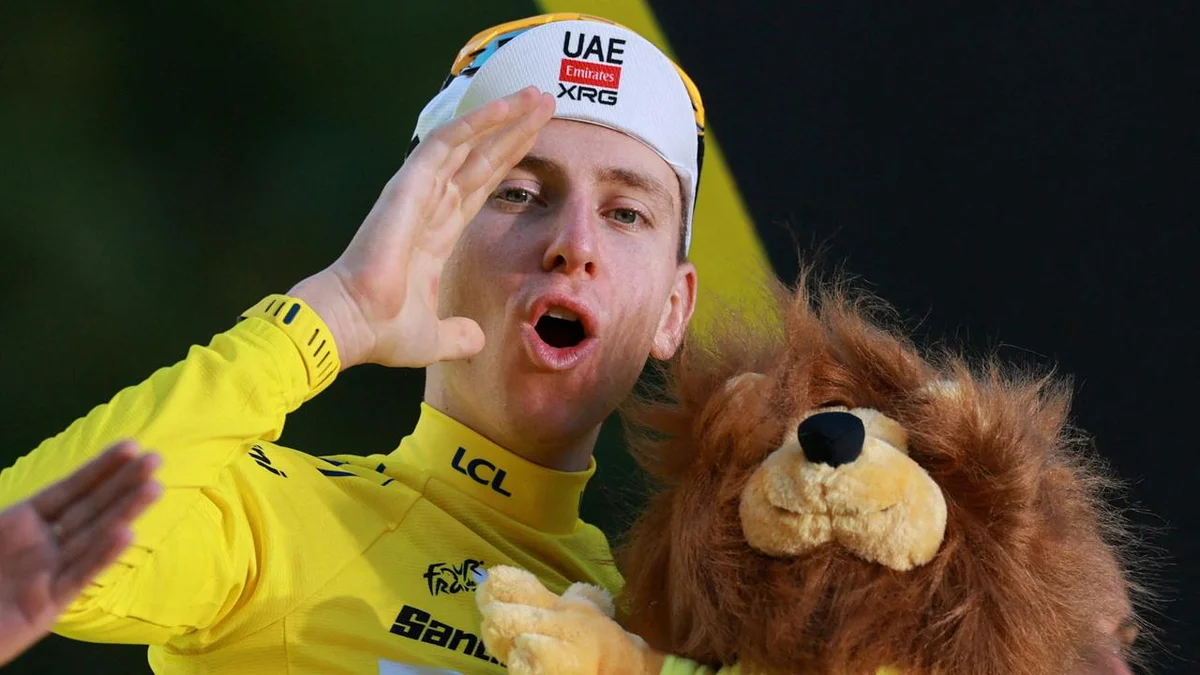
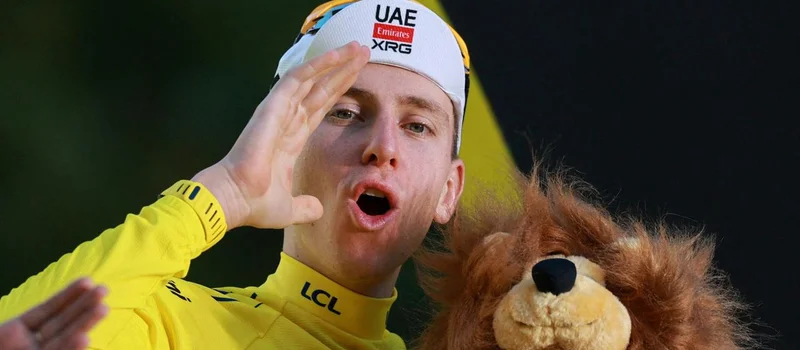
Tadej Pogacar has clinched his fifth Tour de France title, joining the ranks of cycling legends. There are no signs that his dominance will wane in the coming years.
As Tadej Pogacar crossed the finish line in Paris, he emphatically raised five fingers on his right hand, proclaiming, "Five!" He then mirrored the gesture with his left hand, reiterating, "Five!" It was as if he needed to announce to the world that he had just secured his fifth Tour de France victory. "Whether it's the first or the fifth win, I just want to enjoy the moment and not think about history," Pogacar stated.
However, history was indeed being made. With this latest triumph, Pogacar has aligned himself with cycling greats like Jacques Anquetil, Eddy Merckx, Bernard Hinault, and Miguel Indurain, all of whom have also won the Tour five times. "Every victory is special; each has its own story," Pogacar reflected. "Seven Tours, seven podiums, and five wins. It sounds like something out of a novel, and it's incredible even for me."
While Lance Armstrong's seven titles are marred by controversy and erased from the sport's history for valid reasons, nothing seems to stop Pogacar from potentially adding a sixth, seventh, or even eighth Tour victory to his name. His dominance in cycling is undeniable, and at just 27 years old, he is the youngest among the group of five-time winners.
Pogacar's Strategic Dominance
This year’s Tour de France resembled a collapsing soufflé, with the outcome seemingly decided after just four days. Danish cyclist Jonas Vingegaard, despite his valiant efforts, could not pose a real challenge following a critical crash on the 15th stage. Other competitors had already resigned themselves to battling for the remaining podium spots.
Pogacar showcased a new level of dominance during this Tour, almost single-handedly dictating which stages he would claim for himself and which he would allow others to win. While he missed out on Paris, he made sure to conquer the first stage to Alpe d'Huez, navigating its 21 iconic hairpin turns.
Record-Breaking Ascent
Even a bout of illness that affected half of his team during the third week did not hinder Pogacar. He stormed up the legendary climb in record time, surpassing Marco Pantani's ascent from 36 years ago, which had been tainted by the era of EPO doping. The only rider who could match Pogacar in time trials was Remco Evenepoel.
Evenepoel, while the best of the rest, finished a staggering 6:26 minutes behind Pogacar after covering 3,276.9 kilometers. This margin was even greater than the 6:17 minutes Pogacar had over Vingegaard in 2024, who was hampered by a crash earlier in the season.
The Why Behind His Dominance
The gap to Evenepoel could have been even larger had Pogacar not chosen to assist his teammate Isaac del Toro on the penultimate day, allowing the Mexican to secure his own podium finish in Paris.
Pogacar’s overwhelming superiority this year raises questions about the reasons behind it. Vingegaard's withdrawal might explain some aspects, as he could have applied pressure in the third week. However, the final outcome likely would not have changed.
Interestingly, Pogacar himself noted that he did not feel significantly stronger than in previous years. "I didn't feel like I was much better than in 2024," he admitted. "I've gained more experience and improved in small ways. Maybe the numbers are the same, but the details matter. My mood and emotions have improved significantly, which is why I'm performing so well this year."
The Importance of Numbers
Nevertheless, numbers do matter. For instance, Pogacar’s record ascent time to Alpe d'Huez can be attributed to advancements in cycling technology, aerodynamics, nutrition, and other scientific innovations over the past five years. His power output is estimated to peak at around 8.4 watts per kilogram. On the nearly 18-kilometer climb to Tourmalet, he reportedly averaged 6.4 watts per kilogram. While exact figures remain undisclosed, if these estimates hold true, Pogacar operates in a realm once considered beyond human capability.
The Greatest Endurance Athlete?
A study set to be published in the "International Journal of Sports Physiology and Performance" will estimate Pogacar's VO2max value based on his remarkable mountain performances over the past two years. This metric indicates how much oxygen a person can utilize per kilogram of body weight per minute.
Christopher Froome, a four-time Tour winner, recorded an impressive VO2max of 85 milliliters per kilogram per minute. Researchers estimate Pogacar's VO2max to be between 90 and 102. Though lacking official data, the study’s authors conclude that Pogacar must possess extraordinary physiological capabilities, leading them to ponder whether he is the greatest endurance athlete of all time.
Ongoing Doping Concerns
This question remains unanswered until Pogacar’s actual data is made public. What is clear is that he is an exceptional athlete in a sport that has a complex history with doping. The skepticism surrounding outstanding performances is a reality in cycling, much like the energy gels consumed during races.
The International Testing Agency, which conducts doping tests on behalf of the UCI, even visited Pogacar and Vingegaard in the middle of the night, which is typically reserved for cases of serious and concrete suspicion of doping. Pogacar described these tests as "inhuman," but he also expressed understanding, stating, "It’s part of my life, like grocery shopping."
A Charismatic Champion
Now a five-time Tour winner, Pogacar bears a certain responsibility for his sport. Unlike the authoritarian Bernard Hinault of the 1980s or the infamous Lance Armstrong, who was later exposed for doping, Pogacar embodies the role of a champion with charm and humor. However, his dominance has sparked mixed reactions; he noted some boos directed at him during the Tour. Yet he remains undeterred, stating that this only makes him and his team stronger.
Fans still gather around the UAE team bus, eagerly chanting "Pogi, Pogi, Pogi" to catch a glimpse of their cycling hero. However, the cycling community, particularly in France, has previously turned away from those whose dominance they perceive as a threat to the culture of the Tour de France.
The Search for a True Challenger
For now, Pogacar remains a crowd favorite, and there seems to be little indication that his supremacy will be challenged in the near future. French fans are pinning their hopes on 19-year-old Paul Seixas, who made a remarkable debut by finishing fourth overall, nearly twelve minutes behind Pogacar.
Seixas could be the future star of the Tour. By then, Pogacar may have already retired, possibly with six, seven, or even eight Tour victories to his name. "We have fulfilled this dream," Pogacar said in Paris. "Let’s not jump to the future just yet."