Nostalgia Meets Innovation: The Resurgence of Analog Media in the Digital Age
In an era dominated by digital media, the resurgence of analog formats like vinyl records, Blu-rays, and film projections reflects a cultural shift in how we consume media. Explore the reasons behind this trend and its implications for film enthusiasts.
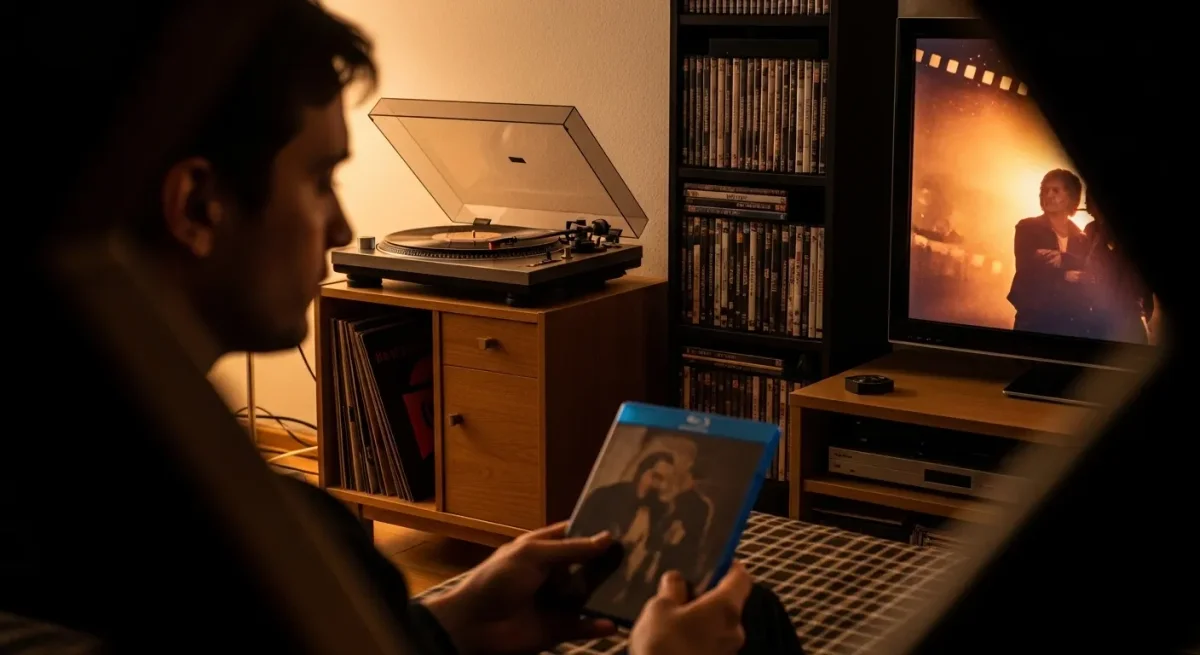
As you scroll through streaming menus today, it might seem like everything is digital, instantly accessible, and increasingly convenient. However, an intriguing trend is emerging. In an era dominated by apps, cloud services, and endless choices, many individuals are rediscovering the charm of analog media. This revival is evident not only in vinyl records but also in Blu-rays, film cameras, instant photography, and even special cinema evenings featuring 35mm or 16mm projections. For a contemporary cinema magazine, this phenomenon is more than just a passing trend; it reflects a significant cultural shift in media consumption.
This unique blend of nostalgia and innovation is not a sign of digital failure but rather a response to the overwhelming presence of digital media. Today, people are not just passive consumers; they seek to make conscious choices, collect, and engage with their media. Film and series enthusiasts in Germany, in particular, are feeling this shift acutely—whether in theaters, home cinemas, or in deciding which films they want to own rather than merely stream.
In this article, we will explore the reasons behind this trend, the statistics that illustrate it, its implications for cinema, streaming, and home viewing, and how you can leverage this change in your own film experiences. We will delve into current data, cultural motivations, family experiences, technological considerations, and the future of film enjoyment amid the tension between digital convenience and analog allure.
Why Analog Media is Gaining Popularity Now
The resurgence of analog media may initially appear contradictory. With streaming services, 4K content at our fingertips, and entire series libraries available in our pockets, why revert to records, discs, or film reels? The answer lies in the very ubiquity of digital options, which has sparked a desire for something tangible, slower, and more meaningful.
Media scholar Dominik Schrey articulates this point clearly:
"There are many phenomena I have described as analog nostalgia, which represent an attempt at deceleration or perhaps even a form of resistance."
This deceleration resonates with many film fans. When inserting a disc or purchasing a ticket for a special analog screening, individuals are making a deliberate choice. There are fewer distractions, less scrolling, and more focus.
Statistics support this notion, indicating that the trend is not merely emotional. According to Deutschlandfunk, over 5 million vinyl records are expected to be sold in Germany by 2025. Additionally, vinyl sales have increased by 2.8%, even as the overall physical market faces challenges. This suggests that while not every physical medium is thriving, certain formats are growing because they offer something that digital cannot fully replicate.
Statistics that Illuminate the Trend
When discussing nostalgia and analog media, it's essential to consider the data. The comeback of analog is measurable across various markets. Notably, there is a distinction between the mass market and niche segments. Physical media are not universally regaining popularity; instead, they are becoming more selective, high-quality, and associated with collector value.
Key statistics regarding the analog and physical media market in Germany include:
| Metric | Value | Context | |--------------------------------------|---------------|-------------------------------------------| | Vinyl record sales in Germany 2025 | > 5 million | Strong signal for the analog comeback | | Revenue from physical music media 2025 | 345 million € | 14.2% market share in the music market | | Vinyl revenue 2025 | +2.8% | Growth despite a weaker physical segment | | Home video physical market Germany 2025 | 218 million € | Shrunk but still relevant for collectors | | Blu-ray revenue H1 2025 | 55 million € | Decline, but important in the premium sector| | DVD revenue H1 2025 | 49 million € | Significant decline in the mass market |
The table reveals a crucial pattern: while physical media may be losing ground overall, their cultural significance remains intact. This is particularly interesting for a cinema magazine because film enthusiasts, collectors, and home cinema users are not necessarily buying more; they are buying smarter.
A study on the analog revival also provides compelling insights. 21% of respondents in Germany reported listening to vinyl in the past month, with 80% of buyers owning a turntable and 87% citing sound quality as a significant factor. Even cassettes are making a comeback, with 10% of respondents listening to them recently—a notable resurgence for a format previously considered obsolete.
For film aficionados, this means that ownership, ritual, and quality are regaining importance. Consequently, Blu-rays, UHD, and curated cinema series are today more appealing than they were a few years ago.
The Psychological Impact of Nostalgia
Nostalgia is often dismissed as mere sentimentality, yet it serves as a potent psychological mechanism. It links memories with feelings of safety, belonging, and positivity. In uncertain times, familiar characters, trusted formats, and established viewing habits become more powerful.
Neuroscientist Tobias Esch explains:
"Nostalgia is a positive recollection of a past experience that we remember and anticipate positively."
This explains why remakes, reboots, and re-releases often resonate so well. An older narrative not only promises entertainment but also evokes a sense of familiarity. Psychologist Stephan Grünewald notes that the retro trend is also tied to a fatigue with crises; in uncertain times, familiar cultural forms provide comfort.
This phenomenon is particularly evident among families, where parents introduce their children to characters, films, or music that shaped their own childhoods. Film producer Christian Becker describes this need:
"It’s about a feeling that one experienced as a child or teenager, and wanting to relive it, perhaps now together with one’s own children."
In the film industry, this is reflected in anniversary screenings, cult film weeks, and newly released editions. This is not a regression; rather, it is an emotional upgrade. Media are increasingly becoming experiences to be shared rather than mere background entertainment.
The Cinema Magazine and Cinema as an Event
For film fans, the return of analog media in cinema is particularly exciting. It's not about all theaters reverting to film reels, but rather about exclusivity. A 35mm screening, a 16mm outdoor cinema, or a curated retrospective offers a different experience compared to a standard showing.
The appeal lies in the event nature of these experiences. Attending the cinema is not just about watching a film; it’s about engaging with a unique form of viewing. This creates a new sense of value often absent in the streaming realm. Examples abound in Germany, such as a 16mm outdoor cinema in Stuttgart that features themed evenings and a deliberately nostalgic atmosphere (SWR). Similarly, 35mm events in Berlin demonstrate how analog projection can function as a curated experience (Cineville).
This trend aligns with filmmakers like Christopher Nolan, who continue to advocate for analog film techniques, infusing the topic with both technical and cultural significance (Moviepilot).
For those who appreciate such experiences, it’s worth exploring unique cinema concepts like Autokino Deutschland: the best drive-in cinemas or cult films in theaters and streaming: what is worth it today. Here, too, the value of cinema is enhanced when it transcends being merely a screening space.
For modern cinemas, the takeaway is clear: it’s not about quantity, but about curation. Theme nights, original formats, classics with introductions, and high-quality projection are ways for cinema to reaffirm its value in a digital age. Attention to modern sound, such as Dolby Atmos in theaters, also provides insights into when the added expense is justified.
Home Cinema: The Balance Between Streaming Convenience and Collector Passion
The conflict in home cinema is particularly pronounced. On one hand, there are streaming services offering maximum convenience; on the other hand, there are discs, collector editions, and a level of image and sound quality that is often more stable and superior. Many are starting to realize that not everything available for streaming today will remain accessible tomorrow.
This is where physical media assume a new role. Blu-rays and 4K UHD are no longer the standard format for all; they have become premium formats for those who genuinely appreciate a film. This is especially true for fans of cult films, arthouse titles, genre cinema, and major blockbusters with intricate sound design.
A practical difference lies in bitrate. Physical media typically provide more consistent image quality and less compression than streaming. Additionally, they offer bonus materials, alternative cuts, and collector value. Those with a good home setup quickly notice these distinctions. If you’re looking to enhance your system, resources like Dolby Atmos at home explained: when cinema sound is truly worth it, how to optimally set up your home cinema: the complete guide for top-tier film enjoyment, and home cinema projectors or TVs: what’s better for films, series, and small spaces can be beneficial.
This does not imply that streaming is inferior; on the contrary, streaming is quick, flexible, and ideal for discovery. However, if you wish to own a film in good quality permanently, physical formats often represent the more reliable choice. Thus, analog and physical media do not stand in opposition to digital; they complement it in areas where reliability, quality, and ritual become paramount.
The Persistence of Analog Aesthetics in Digital Films
Even in completely digital media, analog influences are often present. Many series and films today consciously incorporate film grain, VHS aesthetics, retro color palettes, or Polaroid effects. This aesthetic evokes intimacy, warmth, and character. Audiences respond positively because it disrupts the sterile perfection of smooth digital images.
This is particularly fascinating in the streaming age. While platforms deliver technically pristine surfaces, creative teams intentionally weave in traces of blur, grain, and aging. This results in a blend of innovation and nostalgia. The image may be new, but the feeling remains familiar.
Futurist Tristan Horx interprets this analog resurgence as a counter-movement to total digitalization. This perspective is valuable as it illustrates that analog is gaining significance not only as a device or medium but also as a stylistic element (Deutschlandfunk Kultur).
For a cinema magazine, this is a crucial point. Those writing film reviews or analyzing series should not only focus on plot and cast but also consider the surface aesthetics that contribute to the overall experience.