DFB's Changing Stance on Gianni Infantino Reflects a Shift in Priorities
The DFB, once a vocal critic of FIFA President Gianni Infantino, has shifted from a confrontational stance to a more cautious approach, reflecting changing priorities within the organization.
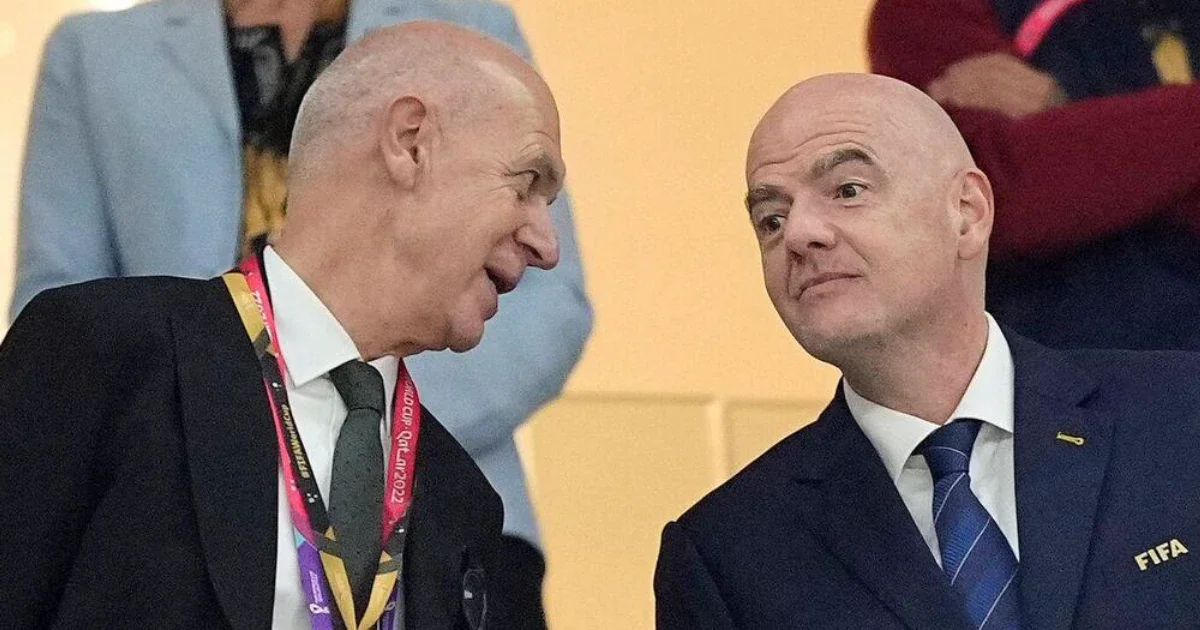
The German Football Association (DFB) was once renowned as one of the most vocal critics of FIFA President Gianni Infantino. However, this confrontational approach has gradually morphed into a more cautious stance over time.
Many may have forgotten that the DFB held a strong position against Infantino, particularly leading up to the 2022 World Cup in Qatar. When Infantino sent a letter urging participating nations to avoid allowing football to be embroiled in ideological or political conflicts, DFB President Bernd Neuendorf dismissed this request. Instead, he highlighted various issues surrounding the tournament during a press conference, including the lack of compensation for families of deceased migrant workers, homophobic remarks made by the Qatari World Cup ambassador, and the contentious debate over the One-Love armband.
Neuendorf began his presidency with a clear commitment to human rights, criticizing FIFA for its failure to take a strong stance on these issues and announcing that he would not support Infantino's re-election. He described the FIFA President's letter as "irritating and disturbing."
Initially, Neuendorf projected an image of a DFB President willing to stand firm, not merely seeking to secure advantages for the association. However, this assertiveness seems to have diminished over time, leaving behind a more subdued approach.
In the lead-up to the World Cup in Qatar, the DFB invited human rights advocates to educate national team players about the humanitarian situation in the host country. Former coach Hansi Flick expressed a determination to raise awareness about these issues, stating, "We want to highlight the injustices. That’s what the DFB stands for, and that’s what the team stands for."
Recently, a press conference held by Sports Director Rudi Völler illustrated a significant shift in tone. He emphasized the need to separate politics from football to avoid a repeat of the controversies experienced in Qatar. This statement came in response to sentiments in Germany suggesting that political issues had hindered the team’s success.
The DFB's adaptation appears to be a strategic lesson learned from Neuendorf's earlier confrontational stance, which some believe may have jeopardized Germany's bid to host the Women's World Cup in 2027, an event that will now take place in Brazil instead.
What followed can be seen as a capitulation to FIFA. Völler, upon taking office in February 2023, distanced the association from the rainbow armband initiative, framing it as a return to normalcy. Neuendorf seemed to adopt a mantra of "better not to rock the boat," even failing to publicly criticize the awarding of a FIFA peace prize to Donald Trump.
The DFB's previous firm stance on Qatar has faded, with the organization now striving to normalize its relationship with FIFA, which has meant leaving Infantino unchallenged. Despite ample opportunities for criticism, including the expansion of the World Cup format and Trump’s involvement in FIFA affairs, the DFB has not taken the lead. Instead, it was the UEFA that first voiced concerns over Infantino’s rapid sale of World Cup shares to private investors, prompting the DFB to react only after UEFA's initial outrage.
Neuendorf's responses have been muted, merely insisting that certain actions should not be overlooked, but only after UEFA had already expressed its discontent. As Infantino's plans for investor deals emerged, it was again UEFA that threatened a boycott, with Rettig stating, "UEFA was the first to stick its head out. It’s easy to jump on a moving train, but someone has to be at the front."
The DFB's role in critical discussions has shifted from a leadership position to that of a follower, contrasting sharply with smaller associations like Norway, which have consistently opposed Infantino’s excesses. Rettig criticized Infantino’s actions regarding investor deals as "highly inappropriate" and noted that the loss of trust in Infantino is "irreparable," hinting at a desire for change at the top. Such strong statements are not typically expected from a DFB official looking to secure their future.
Although Neuendorf recently refused to endorse Infantino’s re-election bid for 2027 and has begun to adopt a more critical tone, this shift only occurred as resistance against Infantino grew from various quarters. This marks a slight improvement compared to the previous years, at least.