
The Future of Accessibility in Cinema: What to Expect by 2026
Accessibility in cinema is set to transform by 2026, driven by new regulations and technology. This article explores the implications for streaming platforms and audiences.
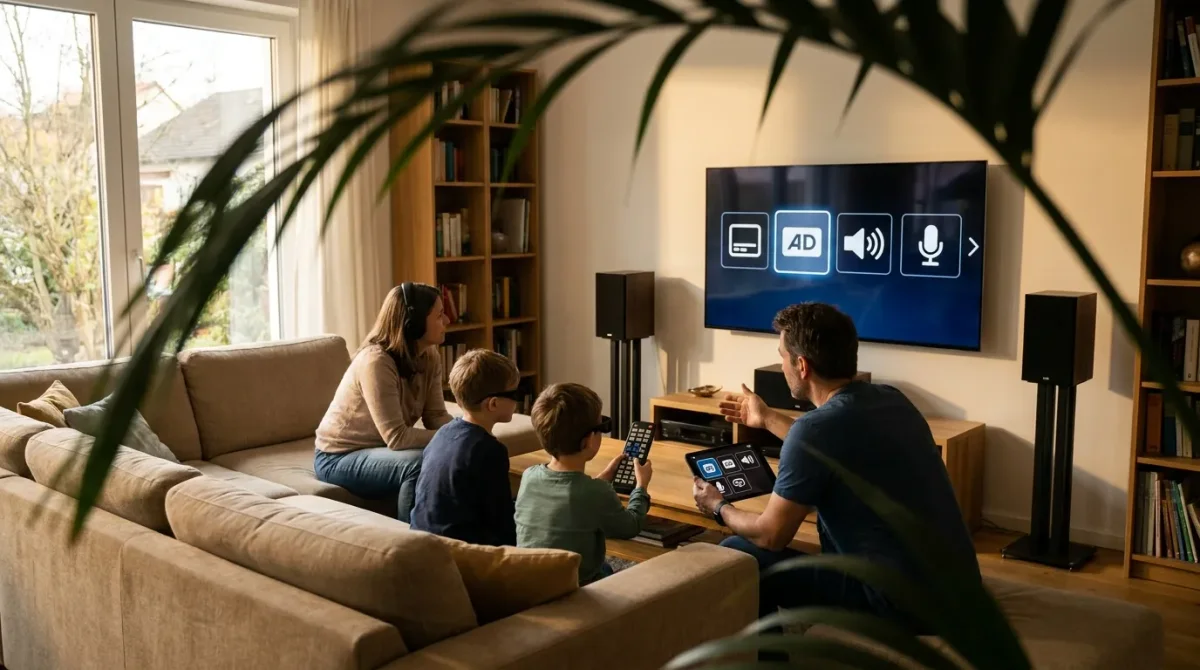
Accessibility has often been seen as a peripheral issue, but by 2026, that perception is set to change dramatically. Following the introduction of the Barrier-Free Strengthening Act (BFSG) in Germany, digital accessibility is no longer an optional enhancement but a fundamental component of quality digital services. This shift affects not only online retailers and government services but also cinema portals, streaming platforms, smart TV applications, ticket bookings, and home cinema interfaces. For film and series enthusiasts in Germany, this topic is becoming increasingly relevant.
When searching for a movie, activating subtitles, or navigating an app with a remote control, users can quickly discern whether a service is well-designed. Effective accessibility simplifies the experience, while poor accessibility can lead to frustration for all users. The significant change anticipated by 2026 is that what was once considered a niche concern will emerge as a clear marker of quality.
This article explores what lies ahead in 2026, examining the legal and regulatory pressures driving change, the role of artificial intelligence, the improvements needed from streaming services and cinemas, and why accessibility cannot be merely checked off as a box. Additionally, it provides numerous examples from the media landscape, a comprehensive overview for film and series fans, and practical tips on what to look for in platforms, apps, and digital offerings.
Why Accessibility Will Be a Turning Point in 2026
The primary reason for this shift is legal. As of June 28, 2025, the BFSG mandates that many recommendations regarding accessibility become enforceable obligations. Companies can no longer just discuss accessibility; they must implement, test, document, and provide proof of their efforts.
This is particularly crucial in the entertainment sector. A streaming platform is not merely a collection of films and series; it is a digital product encompassing navigation, search functions, players, subtitles, audio settings, forms, and often payment pathways. Any barriers within these features can turn leisure activities into sources of frustration.
Data from Aktion Mensch and Google highlights the current accessibility gap: 4 out of 5 online shops in Germany are not accessible, with only 20% being partially accessible. While streaming platforms are not directly comparable to retail websites, these figures starkly illustrate that many digital services still have significant work to do.
Current Statistics on Digital Accessibility in Germany
| Metric | Value | Assessment | | --- | --- | --- | | Non-accessible Online Shops in Germany | 4 out of 5 | Significant implementation gap | | Partially Accessible Online Shops | 20% | Initial progress | | Fully Accessible Websites in Germany | 11.84% | Improvement, but still low |
The direction is clear: 2026 will mark the transition of accessibility from a project to an ongoing process. This sentiment is echoed in a professional contribution from netz-barrierefrei.de, which aptly describes 2026 as a year of consolidation and gradual innovation. For those interested in cinema developments, the 2026 film calendar will showcase significant trends and releases.
What Digital Accessibility Really Means for Streaming
Many people associate accessibility with physical features like ramps or elevators, but in the digital realm, the focus shifts to usability, readability, comprehensibility, and alternatives. For streaming services, cinema websites, and home cinema apps, this means that content must be accessible and manageable without a mouse, compatible with screen readers, usable by individuals with visual impairments, and equipped with subtitles or audio descriptions.
In 2026, terms like WCAG 2.2 and EN 301 549 will become familiar even to non-experts. These standards raise essential questions: Is the focus visible? Can everything be operated via keyboard? Are forms easy to understand? Are color contrasts sufficient? Does the interface function on smartphones or smart TVs?
For fans of films and series, these issues are very concrete. Imagine a streaming app where you cannot easily identify your current position using a remote. Or a player where subtitles are buried deep in a complicated menu. Or a cinema app that only displays error messages in red during ticket booking. While these issues may seem minor, they can exclude users from enjoying the content.
According to an analysis, 71% of evaluated European websites fail to meet adequate color contrast standards (digital-magazin.de). This is particularly relevant for home cinema users, as interfaces on televisions are often navigated from a distance. What may be readable on a laptop can quickly become difficult on a TV in dim lighting.
For a deeper dive into accessibility specifically for film and series offerings, it is worthwhile to explore accessibility in streaming and cinema: What services truly provide for those with visual and hearing impairments. This examination reveals the varying levels of accessibility among platforms and cinemas today.
The Significant Shift Away from Overlay Thinking
One of the most crucial developments anticipated for 2026 is the departure from the notion that accessibility can be simply added through a small widget or overlay. Many providers have hoped that a single tool would suffice, but the reality is far more complex.
Automated scans reportedly cover only about 30% of all WCAG criteria (Weezly). This means that while a tool can provide insights, it cannot genuinely assess the user experience. It fails to reliably determine if a screen reader menu is logically structured, if focus transitions correctly, or if a description is contextually helpful.
Only one-fifth of the most visited webshops in Germany are partially accessible. Again, only about one-fifth of tested websites meet the crucial criterion of keyboard operability for many individuals with disabilities.
For streaming services, media libraries, and cinema portals, this translates to the understanding that true accessibility is built into the platform's architecture. The code must be clean, navigation must be logical, forms should provide clear instructions, and players need to have straightforward controls. Subtitles and audio descriptions should be easy to find.
A before-and-after example illustrates this point: Before: An app has an overlay, but the search function is difficult to navigate with a remote, subtitles are hard to locate, and focus disappears in the menu. After: The app is restructured, controls are clearly marked, contrasts are improved, and keyboard and remote logic is tested. This process is more labor-intensive but results in genuine digital accessibility.
Media Houses, Streaming Platforms, and Broadcasters Are Expanding Visibility
For film and series fans, one exciting development is that accessibility in audiovisual content will become more prominent by 2026. This includes not only websites but also the content itself. Subtitles, audio descriptions, sign language, and easy-to-read language options will continue to expand.
Media authorities report measurable progress in accessibility within private television and streaming providers (Die Medienanstalten). The NDR has also announced plans to further enhance its accessible offerings in 2026, particularly regarding subtitles, audio descriptions, sign language, and easy-to-read language (NDR).
In practical terms, this means that viewers streaming series or using media libraries in 2026 will encounter more accessible options. However, visibility alone is not enough; quality is key. Automatically generated subtitles may be quick but are not always accurate. Audio descriptions might be available but hard to find. Sign language may be offered but only in limited formats.
This creates a new competitive advantage. Platforms that integrate these features seamlessly rather than hiding them away will appear more modern and user-friendly. This could also be an editorially exciting topic for sites like KINOFANS, as accessibility in streaming could soon be as relevant as picture quality, catalog size, or subscription price. For those looking to compare current platforms, a glance at streaming platforms in 2026: Best Films and Series Compared could be beneficial.
Why Accessibility-by-Design Will Be Crucial in 2026
The smartest trend for 2026 is not merely fixing issues post-launch but incorporating accessibility from the outset. Accessibility-by-design means that accessibility considerations are integrated during the planning phase, not just after launch or in response to complaints.
For a streaming platform, this would involve asking whether all control elements are accessible via keyboard or remote right from the design phase of a new player. When designing a menu, it’s essential to check if contrasts are strong enough and if focus states remain clearly visible. Editorial teasers should be crafted with comprehensible language, meaningful image descriptions, and clear structure.
This approach ultimately saves time and money. A comprehensive overhaul later on is almost always more expensive than a clean start. This principle also applies to cinema portals with booking processes. If a form has clear error messages, logical field sequences, and understandable labels from the beginning, less repair work will be needed later.
According to the Federal Office for Accessibility, the number of initial inquiries regarding accessibility and the BFSG rose by 31% in 2024 (Bundesfachstelle Barrierefreiheit). This indicates that many companies are beginning to realize the need to adjust their processes. By 2026, this understanding will be translated into everyday practices.
For film and series portals, accessibility-by-design could even provide an editorial advantage. For instance, if new releases, reviews, or streaming tips are presented in a way that is easy to read, well-structured, and navigable, it benefits not only individuals with disabilities but also families, older users, and anyone seeking to quickly grasp content on smartphones or smart TVs. This aligns with topics such as Independent Films in 2026: New Voices and Trends in Focus, where new viewing habits and digital usage will play a significant role.
AI Assists but Cannot Replace Genuine Testing
By 2026, artificial intelligence will become more prominent in the realm of accessibility, particularly concerning automated subtitles, image descriptions, initial accessibility checks, and personalized interfaces. At first glance, this may seem like a perfect solution, but in practice, AI acts more as an assistant than a replacement.
In terms of subtitles, AI can save significant time by quickly generating rough drafts and processing large volumes of material. However, challenges arise with films and series due to nuances like irony, dialects, background noises, and music. Ultimately, while AI can facilitate the process, it cannot replace thorough human evaluation to ensure that accessibility is genuinely effective and user-friendly.