
Nolan's Odyssey: A Spiritual Horror Journey
Christopher Nolan's adaptation of Homer's Odyssey presents a dark, intense journey filled with mythological themes and horror elements, earning it a solid rating despite some visual and casting missteps.
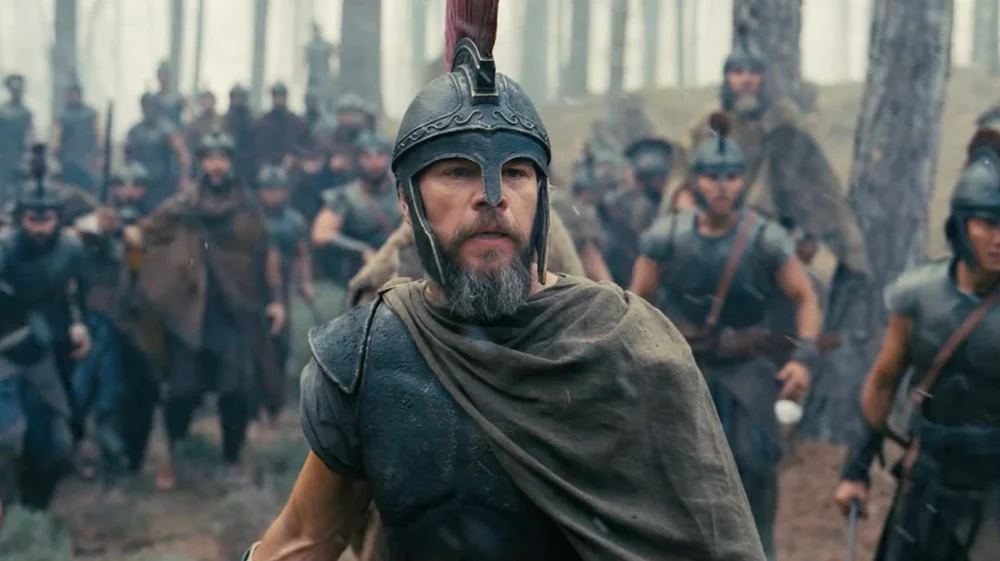
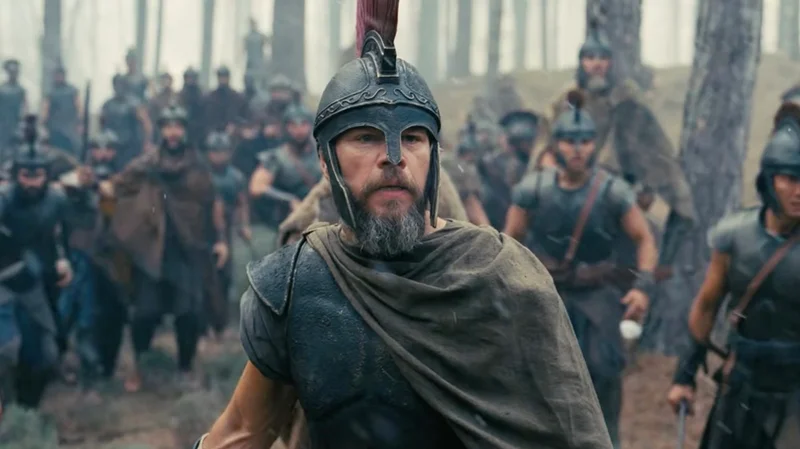
© Universal Pictures
8 out of 10 Mythological Monsters (Non-IMAX Version!)
Can Christopher Nolan truly make a bad film? According to the internet, the answer is a resounding no. Even his three least acclaimed films would still score a solid 7 out of 10 on my rating scale, which is the upper threshold for above-average movies. Dark, dramatic, and full of BRAAAAAHM, Nolan's works may not appeal to everyone.
However, when it comes to adapting Homer's Odyssey, Nolan's signature style provides a fertile ground—or should I say, a FURCHTBAREN (terrifying) one? (Hahaha, GENIUS-LEVEL WORDPLAY)
For those who enjoy dark or horror fantasy, like myself, and perhaps are currently running a D&D campaign such as Curse of Strahd (also like me), Odysseus’ adventures are a thrilling horror trip. At least, that's what happens when you let Christopher Nolan take the reins.
Without giving too much away, the way he portrays some of the monsters and dangers from the Odyssey is incredibly intense. You feel as though you are right in the Cyclops' cave. Each sacrifice demanded by Scylla makes you flinch, and the enchantment of Circe is portrayed on a level that could scarcely be more visceral. The BRAAAAAHM chills are included.
Yet, there’s another aspect of Nolan’s adaptation of Odysseus that pleasantly surprised me:
The Law of Zeus
At first glance, the Law of Zeus simply refers to the commandment of hospitality, which dictates that one should welcome strangers and provide them with food, shelter, and protection, even before inquiring about their name or origin. It’s a heartwarming notion.
However, those familiar with Nolan’s films understand that he often digs deeper. This law embodies the ancient belief that every stranger could be a god in disguise. Thus, one should think twice before spitting soup in someone’s face… or, in the case of the Odyssey, before allowing someone to string a bow.
Hospitality transcends mere social courtesy; it becomes a test of one’s humanity. If everyone carries a divine spark within, then hospitality—also known as compassion or humanitas—emerges as the ultimate commandment that fosters peaceful coexistence.
Through the Law of Zeus, Odysseus’ journey gains new weight and drama. The gift of the Trojan Horse, transformed into a weapon, taints the sacred act of hospitality, leading Odysseus to commit the ultimate sin. This is a transgression for which he must atone for years before he can finally return to his family.
Why I Deducted 2 Points from the Masterpiece
First and foremost, the visuals. Ironically, Nolan's high standards have become his own downfall. He shot the entire film in IMAX format, a feat that has never been accomplished before due to the massive, noisy cameras involved, making it extremely complex. The result is supposed to be epic images on a grand scale.
However, the problem lies in viewing it. As a standard cinema-goer, you only see about half of the film. The top and bottom of the image are cut off, which is quite noticeable. After the first ten minutes, I nearly walked out in frustration as many close-ups featured heads and helmets being cropped.
I often felt the urge to take a few steps back to grasp the full scene. Thankfully, one tends to adjust over time, and in some landscape shots, it’s less noticeable. Nonetheless, I must deduct at least one point for this “error.” I’m certain the film would earn a justified 9 out of 10 points if viewed in IMAX. Unfortunately, I neither have the time nor the funds to jet off to Prague or London to see it as Nolan intended.
But where did the last point go?
The Casting and Nolan’s Layered Narrative
The numerous flashbacks and non-linear structure work effectively to convey his message but also led to some moments of sluggishness for me. Additionally, some casting choices, while subjective, left me puzzled.
Zendaya does not embody Athena for me. Sorry, but Spider-Man's girlfriend lacks the gravitas required to portray a goddess. Does she really need to be in every film? Seriously, EVERY film?
Similarly, I found Samantha Morton to be an unsuitable Circe, at least based on her appearance. The enchantress, described as stunning, should reflect that in casting.
On the other hand, Matt Damon as Odysseus, Tom Holland as Telemachus, and Anne Hathaway as Penelope all deliver solid performances. While I can’t help but see Matt Damon as MATT DAMON!!! in every role since Team America, he still managed to pull off Odysseus convincingly.
Lupita Nyong’o also portrays a strong Helena, despite the literary description of her as fair-skinned. In a film with Greeks played by non-Greeks, this detail matters little. Her role is too minor to warrant any outrage over diversity casting.
Robert Pattinson shines as Antinous, with his portrayal of hatred, envy, and malice palpable enough to feel in my popcorn. Perhaps that’s why I quickly devoured it.
In summary, I found about half of the cast miscast. Perhaps it would have benefited Nolan to not rely entirely on Hollywood stars. I’m sure there are many undiscovered or lesser-known B-list actors who could bring charisma and fresh faces, adding to the mystique of a film set in a forgotten era.
Overall, The Odyssey is a typical Christopher Nolan “blockbuster” that fantasy and mythological saga fans should not miss. While it may not be a perfect masterpiece in my eyes, it is nonetheless masterfully crafted.