The Impact of a Minimalist Poster: Revisiting the Teaser for Shin Godzilla
Exploring the minimalist design of the *Shin Godzilla* teaser poster, which evokes a sense of dread and urgency through its striking imagery and tagline.
In the realm of film promotion, the significance of a movie poster cannot be overstated. The teaser poster for the 2016 film Shin Godzilla, directed by Hideaki Anno, stands out as one of the most striking examples in the science fiction genre.
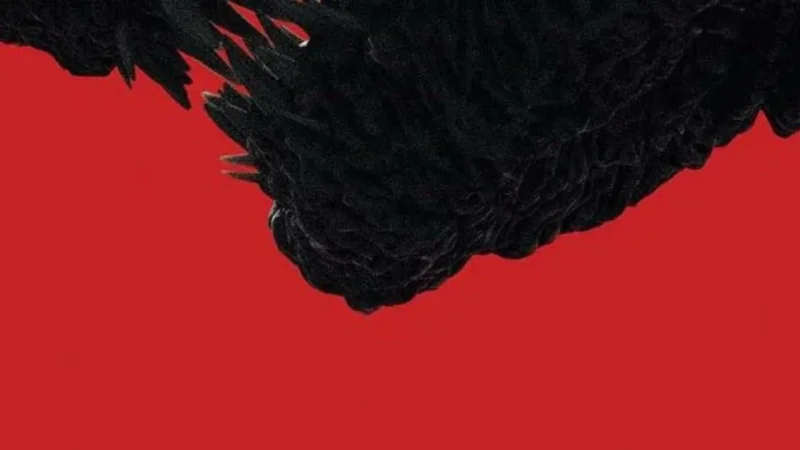
Upon its release, audiences were immediately captivated by the evocative power of the image. Unlike traditional posters, this one takes a more minimalist and unsettling approach. Rather than showcasing the monster in its entirety, it obscures much of its presence, creating a sense of foreboding. The poster is dominated by a deep, uniform red that envelops the entire surface, setting a tone of urgency.
The Dominance of Red
The choice of red is significant, conjuring associations with alertness, danger, blood, flames, and catastrophe. With minimal visual distractions, viewers are immersed in an intense red field, akin to facing an emergency signal.
At the top of the poster, only the lower portion of Godzilla's head is visible, with its massive jaw protruding from the upper edge. The absence of the creature's body, eyes, or complete visage adds to the menacing atmosphere. The dark, almost black, contours of its open mouth, along with irregular and heavy shapes, contribute to an impression of an overwhelming force.
A Chilling Tagline
Prominently placed in the center of the red backdrop is the tagline "God Help Us." This stark black text is simple yet impactful, serving not as a typical action movie slogan but as a desperate plea for assistance. It implies that humanity is not in a position to fight back but instead is seeking help against an incomprehensible threat.
The decision to reveal only a fragment of Godzilla amplifies the poster's intensity. Viewers are left to imagine the rest of the monster lurking off-screen. The visible part is sufficient to convey its scale and menace: if just the jaw occupies a portion of the image, the entire creature must be colossal. Thus, the poster transforms absence into a source of anxiety.
Visually, it functions almost like an official warning, featuring an urgent color, a partially visible threat, and a desperate message. Rather than portraying Godzilla as a spectacular icon, it presents the creature as an apocalyptic force, dwarfing humanity and rendering it powerless.
The Power of Suggestion
This minimalist approach cleverly subverts typical cinematic monster imagery. Instead of displaying a creature in an action pose, the poster relies on suggestion, absence, and fear. Much like the iconic Jaws or Alien, the anticipation of the monster's appearance is far more terrifying than its direct depiction.
The impact of the poster lies in its extreme visual simplicity. A solid red background, a concise tagline, and a glimpse of Godzilla's jaw are all it takes to establish a catastrophic atmosphere. The poster does not provide information; it elicits an emotional response from viewers, signaling that a terrible event is already unfolding.
The color red plays a crucial role in shaping our perception of the image. Instinctively linked to danger, fire, blood, and alerts, it transforms the poster into a genuine alarm signal. With no scenery, human characters, or reassuring elements, viewers are enveloped in a sense of urgency.
 Toho
Toho
Imagining the Worst
The absence of Godzilla's eyes, body, or true size forces viewers to conjure what lies beyond the frame. This limited visibility becomes more unsettling than a complete image of the monster, as it engages the imagination.
Moreover, the tagline "God help us" reinforces this sentiment. It is neither a declaration of war nor a promise of combat; it is a prayer, an admission of helplessness. The poster implies that in the face of Godzilla, humans are not heroes prepared to conquer an enemy but survivors confronted with an insurmountable force.
Ultimately, its power arises from the contrast between the image's simplicity and the vast implications it carries. A mere glimpse of Godzilla's jaw suffices to convey that something immense looms just above us.
The poster does not depict destruction; it does not need to. It captures the moment just before humanity realizes it is facing something beyond its control. This tension between what is visible and what remains hidden is what makes it truly memorable.